
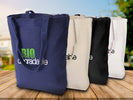
Best Printed Tote Bags for Bulk Orders
, by Admin , 7 min reading time
, by Admin , 7 min reading time
Find the best printed tote bags for events, promos, gifts, and daily use. Compare materials, print quality, sizing, and bulk order value.
A tote bag that looks good in a product photo can still disappoint the moment it gets packed, carried, and reused. That is usually where buyers separate average options from the best printed tote bags. For schools, event teams, corporate buyers, and small businesses, the right bag needs to do more than show a logo. It needs to hold up, print clearly, and make sense for the order size and the job it is meant to do.
The short answer is utility plus print performance. A printed tote bag earns its place when it carries everyday items comfortably, keeps its shape reasonably well, and presents branding or artwork in a clean, readable way. If any one of those pieces is weak, the bag tends to lose value fast.
Material is usually the first filter. Cotton and canvas are popular because they print well and feel familiar for repeated use. Lightweight cotton can work for simple giveaways, especially when cost matters and the bag is meant for light handouts or event materials. Heavier canvas is a better fit when the bag needs more structure and a longer lifespan. Non-woven options can also make sense for large-volume promotions where price and speed are bigger priorities than a premium hand feel.
The handle matters more than many buyers expect. If the straps are too short, the bag becomes inconvenient. If they are too narrow or poorly stitched, the bag feels weak even before it is loaded. The best printed tote bags usually have comfortable handle length, clean stitching, and enough reinforcement to support routine use without creating doubt.
Print quality is the next checkpoint. A strong print should look sharp from a normal viewing distance, with good color hold and enough contrast to stay readable. Fine details can look great on screen but may not translate well to every tote material. That is why simple, bold artwork often performs better than crowded graphics, especially on bulk orders.
The best bag for a trade show is not always the best bag for a campus giveaway or gift purchase. Buyers get better results when they match the bag to the setting first and the design second.
At events, a tote bag needs to be easy to grab, easy to carry, and large enough for brochures, samples, and small branded items. Medium-size bags with a straightforward shape usually work best. If the material is too thin, the bag can sag under event materials. If it is too large, it may feel awkward for attendees moving through a booth area.
For these orders, the best printed tote bags tend to have a clean front panel for logos and a practical handle drop for shoulder carry. A simple one-color or two-color print often gives the strongest result. It keeps branding clear and helps the bag stay useful after the event.
When the bag is part of a welcome package, donor set, staff handout, or client gift, a heavier fabric usually makes more sense. This is where canvas and other more durable constructions stand out. The bag should feel dependable, not disposable.
A stronger bag can also support a wider range of uses, from carrying notebooks and lunch containers to errands and day-to-day supplies. That extra utility matters because it extends the life of the printed message. A slightly higher unit cost can be justified if the bag gets used many more times.
Budget is often a real constraint for these buyers, so the best option may be the one that balances print area, durability, and cost without overbuilding the product. Lightweight cotton or value-focused reusable bags can work well when the order quantity is high and the intended load is modest.
What matters most here is consistency. If a bag is being distributed across a large group, the print should be uniform, the sizing should be reliable, and the order should be easy to manage. A dependable mid-range tote often beats a premium option that pushes the budget too far.
A lot of tote bag buying comes down to three practical questions. What will people carry in it? How often will they use it? How much room does the artwork need?
A compact tote works for flyers, a notebook, a few promotional items, or light daily use. A larger tote suits trade show collections, grocery-style loads, or kits with multiple items. Bigger is not always better, though. Oversized bags can increase cost and make the print look lost if the artwork is too small.
Print area deserves attention early. Some buyers choose a bag first and realize later their design does not fit the panel well. Others build detailed artwork that looks fine on a digital proof but loses impact in production. The best printed tote bags give you enough room for a readable design without forcing the artwork to stretch beyond what the material can support.
Color also affects the final result. Dark bags with light prints can look strong and clear. Natural fabric tones can give a reliable base for simple graphics. Multi-color designs may require more production consideration, and that can affect both turnaround and price. For many bulk buyers, cleaner artwork on a proven fabric color is the safer choice.
Bulk value is not just about finding the lowest price. It is about getting a bag that performs well enough to justify the order. If the print fades quickly, the seams feel weak, or the sizing does not suit the intended use, even a cheap bag becomes expensive.
For larger purchases, consistency is one of the biggest value markers. You want the same shape, the same handle placement, and the same print standard across the full run. That matters for event presentation, internal distribution, and branded kits. It also reduces the time buyers spend dealing with avoidable issues after delivery.
Shipping thresholds can also influence value, especially for organizations placing larger orders. If you are already close to a free shipping level, it may make sense to increase quantity modestly rather than place a smaller order now and another later. That only works if the tote bag is versatile enough to support future use, so practicality should still lead the decision.
This is where a focused supplier can help. A store built around everyday bags and printable merchandise, such as Just Tote Bags Online, is generally better positioned to offer useful range without making the buying process complicated.
One frequent mistake is choosing solely by unit price. That usually leads to bags that feel too thin, print inconsistently, or fail to match the event or program. Another is overestimating how much artwork needs to be included. A clear logo, short message, or simple graphic often works better than a crowded layout.
Buyers also sometimes ignore handle length and bag depth until the order arrives. Those details affect daily usability more than expected. If the bag is awkward to carry, people stop using it, and the printed value drops with it.
The last common issue is ordering without a realistic sense of use. A tote intended for heavy handouts, books, or regular errands needs more support than one meant for a brochure packet or one-day event. Matching construction to expected use is the easiest way to avoid disappointment.
Start with the use case. If the bag is for an event, prioritize portability and print clarity. If it is for gifting or repeated daily use, move toward stronger materials and better structure. If the order is large and budget-sensitive, look for the most reliable balance of cost and function rather than the absolute cheapest item.
Then review artwork needs. A simple logo can work on almost any practical tote. Larger graphics or more color may require more careful product selection. Keep the message readable and scaled to the actual print area.
Finally, think in terms of total order value. Quantity, print quality, durability, and shipping economics all matter. The best printed tote bags are the ones that still make sense after the event ends, after the handout is unpacked, and after the first few weeks of regular use.
A good tote bag should make your job easier, not create questions after delivery. When the material, print, and purpose line up, buying becomes simpler and the result works harder for your brand.


