
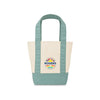
How to Print Tote Bags That Look Sharp
, by Admin , 8 min reading time
, by Admin , 8 min reading time
Learn how to print tote bags for events, giveaways, retail, and bulk orders. Choose the right fabric, artwork, and print method for clean results.
A tote bag with the right print does more than carry items. It puts your logo, message, or event name in front of people again and again. If you're figuring out how to print tote bags for a school, company event, shop, or giveaway, the best results usually come down to three choices: the bag itself, the artwork, and the print method.
Get one of those wrong, and even a good design can look flat, crooked, or hard to read. Get them right, and you end up with a bag people actually use - which is the whole point.
The fastest way to make a tote bag project expensive is to choose the print before choosing the bag. Different tote materials, weights, colors, and seams all affect how ink sits, how crisp details appear, and how long the print lasts.
Start with the job the bag needs to do. A trade show giveaway may call for a lighter, budget-friendly tote. A campus bookstore, gift shop, or employee welcome kit may need a heavier bag that feels more substantial. If the bag is meant for repeat use, durability matters just as much as the printed area.
Once you know the use case, look at the print surface. Flat panels are easier to print cleanly than bags with wide gussets, bulky seams, or pockets placed in the print zone. Natural cotton and canvas are common choices because they print well and give artwork a dependable surface. Non-woven and recycled materials can also work well, but they may need simpler graphics and the right production setup.
That order matters. Pick the bag for function first, then match the print method to it.
Not every tote is equally printable. A bag can look great in a product image and still be a poor choice for detailed decoration.
Fabric weight matters. Lightweight cotton works well for simple logos and bold text, but very thin material can show more texture through the print. Heavier canvas usually gives you a cleaner, more premium-looking result, especially with larger solid areas.
Bag color matters too. A dark bag often needs ink with stronger opacity, and some methods handle that better than others. If your artwork depends on exact brand colors, the fabric shade underneath can shift the final appearance. Printing black on natural cotton is straightforward. Printing a light logo on a dark red tote takes more planning.
Size and construction also affect placement. Standard front-center printing is the easiest option and usually the most consistent in bulk. If you want a large imprint near the bottom edge, close to seams, or wrapping around a gusset, expect more limitations. Some placements simply do not look as clean at scale.
For most business buyers, simple wins. A clean front print on a quality tote is easier to approve, easier to reproduce, and more likely to hold up across a larger order.
If you want to understand how to print tote bags well, you need a basic handle on the print methods. You do not need to get overly technical, but you do need to know what each process is good at.
Screen printing is often the best fit for bulk tote bag orders with simple artwork. It works especially well for logos, text, and designs with one to a few solid colors. The print is bold, readable, and cost-effective at higher volumes.
This method is usually the first choice for promotional orders, school programs, events, and company merch where consistency matters. The trade-off is setup. If your design has many colors or fine gradient effects, screen printing becomes less efficient.
Heat transfer can be useful for shorter runs, names, numbers, or artwork that changes from bag to bag. It can also handle more detailed graphics than basic screen printing in some cases.
The trade-off is feel and long-term wear. Depending on the transfer type, the decoration may sit more on top of the fabric rather than becoming part of it. For some projects, that is perfectly fine. For high-volume promotional use, many buyers still prefer the look and value of screen printing.
Digital printing is a good option when artwork includes multiple colors, fine detail, or photographic elements. It can reduce setup complexity for short runs and sample quantities.
It depends heavily on the bag material and surface quality. On rougher or darker fabrics, results may vary more than buyers expect. If your design is clean, logo-based, and headed for a larger order, digital is not always the best value.
Embroidery is not printing, but it comes up often in custom bag discussions. It gives a durable, elevated look, especially for smaller logos. It is less suitable for large graphics or detailed printed-style artwork, and it can add cost quickly.
For everyday branded totes, embroidery usually makes more sense when the mark is small and the bag itself is more premium.
Good artwork solves problems before production starts. Weak artwork creates them.
Keep the design readable from a short distance. Tote bags are moving items, not posters. Small text, fine outlines, and tightly packed details often disappear once printed on textured fabric. What looks sharp on a screen can turn muddy on canvas.
Use high-resolution files or vector artwork whenever possible. Clean file preparation matters, especially for logos. If your art has fuzzy edges, low resolution, or unofficial brand colors, the final print will show it.
Limit complexity if the bag is a lower-cost promotional style. A simple one-color or two-color imprint often looks better than trying to force a detailed design onto a basic tote. This is one of the most common trade-offs in custom orders: more complex art is not always better art.
Placement matters too. Centered prints are popular because they are predictable and easy to approve. Oversized prints can work, but only if the bag size and seam layout support them. A strong design placed too low or too close to stitching can feel off, even if the print itself is technically correct.
Order quantity changes the best production choice. A small office order of 25 bags is not the same project as 500 event giveaways.
For lower quantities, digital methods or transfers may make more sense because setup is lighter. For larger quantities, screen printing is often the better value and gives strong consistency from bag to bag. That matters for schools, trade shows, conferences, and branded handouts where the full order needs to look uniform.
This is also where budget needs a reality check. Buyers sometimes try to combine a low-cost tote, highly detailed artwork, and a large print area while expecting a premium result. Usually one of those variables has to give. If the budget is tight, simplify the design or move to a tote style that prints more cleanly.
A dependable supplier should walk you through those trade-offs clearly instead of just taking the file and hoping it works.
Most tote bag print problems are predictable. Artwork is too detailed, the bag fabric is too textured, the imprint area is too ambitious, or the chosen method does not match the order.
Another common issue is ignoring bag color. A design that looks balanced on a white background may lose contrast on natural cotton or a darker tote. Always think about the bag color as part of the design, not just the background.
Proofing errors also cause avoidable frustration. Check size, placement, spelling, and orientation carefully. A half-inch shift may not sound like much, but it can change the whole look of the bag.
And do not treat samples as optional when the project is high-stakes. If the bags are for a major event, donor program, campus distribution, or customer-facing use, seeing a proof or sample first is usually worth it.
The best custom tote bag orders start with clear information. Share the quantity, intended use, bag preference, artwork files, and deadline upfront. If you know the bags are for a conference giveaway, bookstore program, employee kit, or resale setup, say so. That context helps shape the right recommendation.
Ask practical questions. What print method fits this artwork? How large can the imprint area be on this bag? Will the fabric affect color accuracy? Is the order better suited to a lighter promotional tote or a heavier canvas style?
If you are ordering in bulk, consistency matters as much as price. A slightly better tote with a cleaner print often delivers more value than the cheapest option in the catalog. That is especially true when the bags are meant to represent your business in public.
For buyers in the U.S. and Canada placing larger orders online, this is where working with a print-focused tote bag supplier can save time. The right partner helps narrow the bag, decoration method, and artwork setup before production starts.
Printed tote bags work best when the decisions are simple and the execution is clean. Choose a bag people will actually use, keep the artwork readable, and pick a print method that fits the fabric and quantity. That is usually what turns a basic order into a bag worth carrying.


